



Dengue fever is an illness spread by the bite of a mosquito infected with one of four dengue viruses. Symptoms are usually flu-like, including a fever, rash and muscle pain. But these can worsen to severe dengue (dengue hemorrhagic fever), which can be fatal. Symptoms of severe dengue include belly pain, severe vomiting and bleeding.
Advertisement
Cleveland Clinic is a non-profit academic medical center. Advertising on our site helps support our mission. We do not endorse non-Cleveland Clinic products or services. Policy
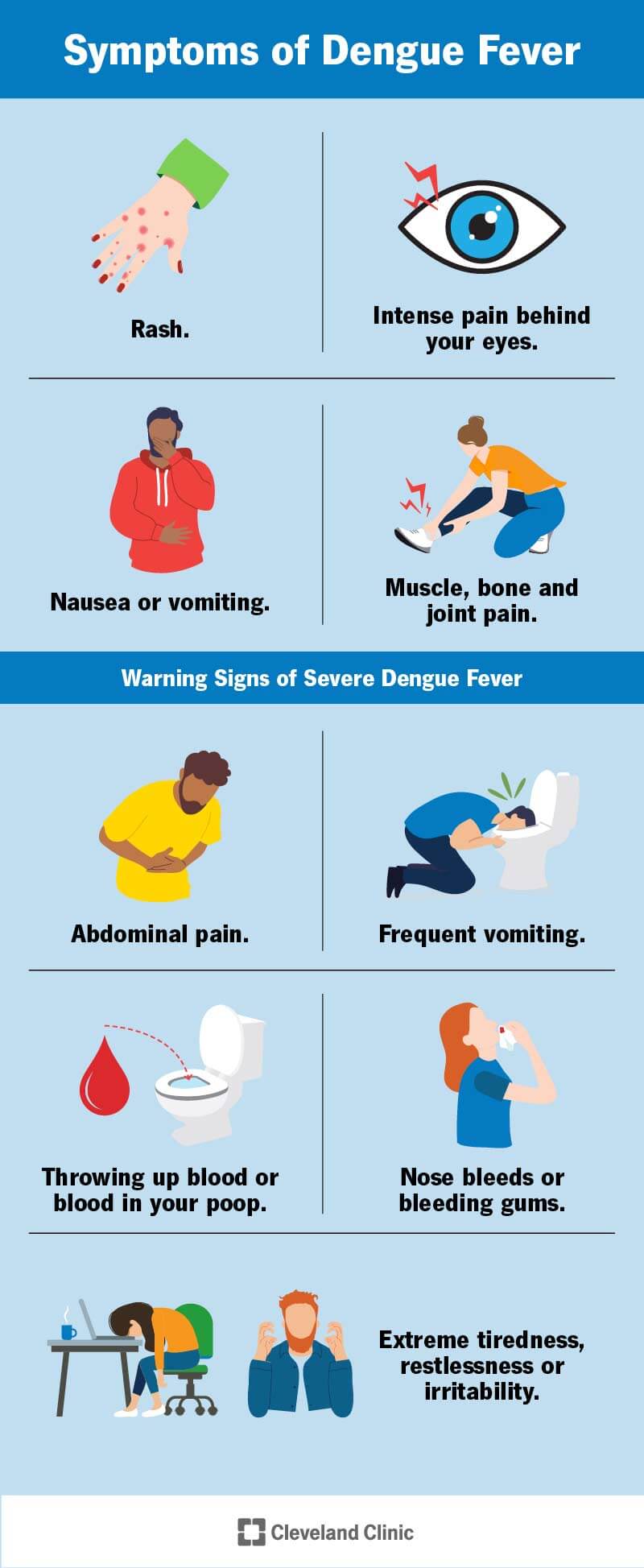
Image content: This image is available to view online.
View image online (https://my.clevelandclinic.org/-/scassets/images/org/health/articles/17753-dengue-fever)
Dengue fever is an illness you can get when a mosquito bites you. Four types of dengue virus (DENV) can cause it. The virus is most common in tropical and subtropical regions, including Central and South America, Africa, parts of Asia and the Pacific Islands. A few parts of the U.S. have also reported cases of dengue.
Advertisement
Cleveland Clinic is a non-profit academic medical center. Advertising on our site helps support our mission. We do not endorse non-Cleveland Clinic products or services. Policy
Many people have mild or even no symptoms, especially the first time they’re infected. But about 1 in 20 people progress to severe dengue (dengue hemorrhagic fever) — serious symptoms that can be fatal. Symptoms of severe dengue usually start a day or two after your fever goes away.
If you have belly pain, severe vomiting, bleeding or extreme tiredness, go to the emergency room immediately. These could be signs that you have severe dengue.
Dengue infections can cause no symptoms, mild symptoms or very severe symptoms. Initial symptoms start appearing four to 10 days after a mosquito bite. They include:
Symptoms of severe dengue start within a few hours to a few days after your initial symptoms start improving. They include:
Four different dengue viruses (DENV) can cause dengue fever. When a mosquito infected with the dengue virus bites you, the virus can enter your blood and make copies of itself.
Advertisement
Severe dengue symptoms happen when you have internal bleeding. Your immune system’s response to the virus can cause your blood vessels to leak. At the same time, dengue can lower your platelet count. Platelets are parts of your blood that form clots and prevent you from losing too much blood. This combination can cause the life-threatening symptoms of severe dengue.
Dengue is spread by Aedes mosquitoes, which also carry viruses like Zika and chikungunya. The mosquitoes bite someone with dengue fever and then bite someone else, infecting them.
Dengue isn’t contagious directly from one person to another, like the flu. But if you’re pregnant and get dengue, you can pass it to your baby during pregnancy or childbirth.
Dengue is most commonly found in:
People living in or traveling to these areas are most at risk.
People at a higher risk for serious illness include:
Severe dengue can be fatal. Loss of blood from internal bleeding can lead to dangerously low blood pressure and organ damage. If you’re pregnant and have dengue fever, it can cause miscarriage, low birth weight or premature birth.
Healthcare providers diagnose dengue with a blood test. They’ll take a sample of blood through a vein and send it to a lab to look for signs of the virus. The lab may also identify which of the four versions you have. Your provider can use a blood test to look for other viruses that cause similar symptoms.
There’s no specific medicine that treats dengue fever. Your healthcare provider will give you recommendations on how to manage your symptoms and when you should go to the ER. If you have severe dengue, you’ll be monitored at the hospital. You might need IV fluids or a blood transfusion.
Your provider can make recommendations for taking care of yourself at home if your symptoms are mild. They may suggest:
Do not take ibuprofen (like Advil® or Motrin®) or aspirin to treat pain when you have dengue. This can increase your risk of life-threatening internal bleeding.
Mild symptoms of dengue can go away on their own in three to seven days. Most people begin to feel better after this, but some have life-threatening complications. You’ll need to stay in the hospital if you have severe symptoms.
Advertisement
Contact your healthcare provider if you live in or have recently visited an area where dengue is common, and you have any symptoms. They’ll give you recommendations on how to take care of yourself and when to seek additional treatment.
If you have any warning signs of severe dengue — even if your initial symptoms have gotten better — go to the nearest emergency room immediately. Severe symptoms can become life-threatening within hours.
Yes. Most people recover from dengue fever without any lasting complications. And most people with severe dengue survive if they’re treated immediately at a hospital or medical facility.
Yes. Because there are at least four versions of the dengue virus, you can get dengue more than once. You’ll usually become immune to the first strain you get sick with and won’t get it again. But you can get sick with one of the other three strains after that. For reasons that aren’t well understood, you’re more likely to get severely sick if you get dengue more than once.
The best way to reduce your risk of dengue is to protect yourself from mosquito bites. Steps include:
Advertisement
Public health officials recommend vaccination to protect kids living in areas where dengue is common. Adults at a higher risk for complications are sometimes eligible, too.
Dengvaxia® is the only vaccine available in parts of the U.S. where dengue is common. It’s recommended for kids ages 9 to 16 who’ve had dengue before. It’s discontinued but available until supplies run out. It isn’t recommended for visitors, only people who live in areas with dengue.
Hundreds of millions of people get dengue every year. Most cases are mild or even symptomless. But the thought of severe dengue can be scary. Fortunately, you can take steps to reduce your risk of mosquito bites and keep an eye out for the warning signs of severe dengue.
If you get sick while traveling, make sure you know where to get emergency medical care. Getting treated right away for severe symptoms gives you the best chance for a complete recovery.
Advertisement



Sign up for our Health Essentials emails for expert guidance on nutrition, fitness, sleep, skin care and more.
Learn more about the Health Library and our editorial process.
Cleveland Clinic’s health articles are based on evidence-backed information and review by medical professionals to ensure accuracy, reliability and up-to-date clinical standards.
Cleveland Clinic’s health articles are based on evidence-backed information and review by medical professionals to ensure accuracy, reliability and up-to-date clinical standards.
Have a virus, fungus or bacteria? Some of these “bugs” won’t go away on their own. Cleveland Clinic’s infectious disease experts are here to help.
